In this article
Dementia care at Uplands, briefly
Uplands is a 65-room nursing home on Leigham Court Road in Streatham, with every bedroom on the ground floor, registered nurses on duty 24 hours and a dementia-trained team. It supports people from the earliest stages of dementia through to complex and advanced needs, including those also living with conditions such as diabetes, Parkinson's or the after-effects of a stroke.
Why a single-storey home in grounds matters
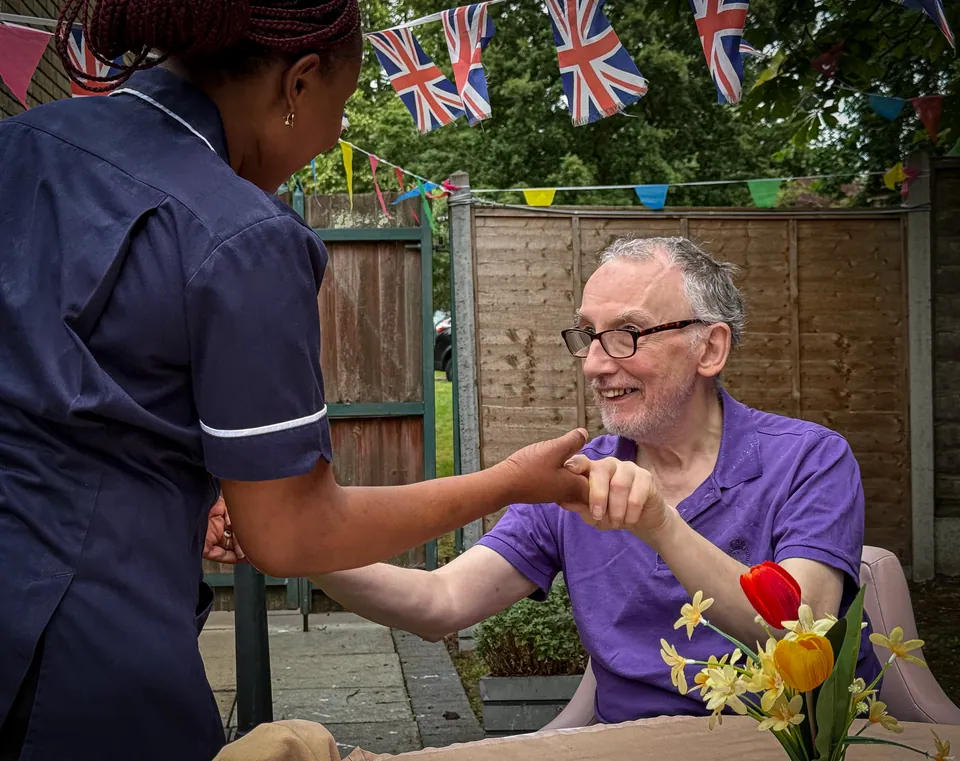
Stairs can be hard for a person who is unsteady or disoriented. At Uplands the bedrooms, the lounges and the courtyard garden are on one level, in a secure single-storey building. Outside are wooded grounds in a conservation area. A person who no longer follows a conversation may still enjoy sitting in the courtyard with a cup of tea, or looking out at the trees.
Nursing dementia care or residential dementia care
Lambeth has both kinds of home, and the difference is simple. A residential dementia home has care staff, with nurses visiting from outside. A nursing home has a registered nurse on site. If a social worker or hospital team has said your relative needs nursing dementia care, look for a nursing home. If they have said residential, a nursing home can still be worth considering, because dementia progresses and you may prefer to avoid a second move later.
How we care for the person, not the diagnosis
We gather a personal history on admission with help from the family: work, faith, music, food and routines. Staff then use it in reminiscence activities and in everyday conversation, because it can help explain why someone wants to leave the building at a particular time or refuses a meal. Calm routines do the rest. You can read more about daily life at Uplands.
Quizzes, word games and group discussion suit people in the earlier stages. Later on, garden parties, dancing on the lawn and time in the reading nook may mean more than any conversation. Support with communication, nutrition, mobility and personal care runs through the whole day, adjusted as the person's abilities change.
Advanced dementia and the end of life
In the later stages people need more help with swallowing, positioning, pressure area care and comfort, and distress often has to be read from a face rather than from words. Uplands' advanced dementia care adds support as needs change, with nurses on site at night and comfort-led palliative care when that becomes the priority. Where a resident needs a dedicated member of staff for assessed hours, one-to-one care can be agreed and written into the care plan.
Families and visiting
Relatives are closely involved in care planning. Tell us about changes you have noticed, and ask us how we will keep you informed about falls, infections and changes in condition. A short, regular visit, perhaps a cup of tea in the courtyard, can suit a person with dementia better than a long one. Ask about visiting times when you come to look round.
Questions to ask any dementia home in Lambeth
- Is a registered nurse on duty overnight?
- If my relative's needs increase, could they stay here, and when might they have to move?
- How do you gather a personal history and how do staff use it?
- What do you try first when a resident is distressed, before medication?
- How often does the GP review sedatives and antipsychotic medicines?
- How can residents get outdoors, and who goes with them?
- How far is it from a resident's room to the lounge, dining room and garden?
- What did the most recent CQC report say, and what has changed since?
Paying for dementia care in Lambeth
A diagnosis of dementia does not by itself bring NHS funding. If a registered nurse is assessed as needed, the NHS pays a weekly NHS-funded nursing care contribution to the home. A smaller group with a primary health need may qualify for NHS Continuing Healthcare, which covers the full fee. The London Borough of Lambeth means-tests the rest against the national capital limits, with a twelve-week property disregard and deferred payment agreements in some cases. Our Lambeth funding guide goes into detail.
Respite for dementia carers
A family caring for a person with dementia at home in Streatham may want to try a short stay before anything permanent. A planned week or two, with the person's routine written down and sent with them, gives the carer some rest and shows how the person settles. Our respite guide explains how to arrange it and how Lambeth can help.
Visiting Uplands
We are at 254 Leigham Court Road, London SW16 2QH, a short walk from Streatham Common. Book a visit through the tour form or call 020 8769 9944. Bring the person if you can, because how they respond to the staff, the lounge and the grounds can tell you a lot.
Where to go next
Sources: Alzheimer's Society · Dementia guide (NHS) · Care Quality Commission · London Borough of Lambeth
A question about care? Our team is here to help.
Talk to our team